ASM INSIGHTS
Demand Control Ventilation (DCV)
18
March
Demand Control Ventilation (DCV)
Most buildings run ventilation at 100% capacity, whether there are 2 people or 200 inside. That’s not smart—it’s just expensive.
Demand Control Ventilation (DCV) changes the game by providing fresh air only when it’s needed.
How DCV Works
1️⃣ Sensors Detect Occupancy and Air Quality
-
CO₂ sensors
-
Occupancy sensors
-
VOC (volatile organic compounds) sensors
2️⃣ Variable Airflow Adjustment
-
Low occupancy → reduces ventilation to save energy
-
High occupancy or poor air quality → increases airflow for comfort and safety
3️⃣ Integration with HVAC Systems
-
Automatically adjusts dampers, fans, and air-handling units
-
Ensures the right airflow in the right space at the right time
The Benefits
✅ 20–30% energy savings on ventilation loads
✅ Better indoor air quality – air supply matches actual need
✅ Longer equipment life – reduced runtime
✅ Lower carbon footprint – greener, more sustainable buildings
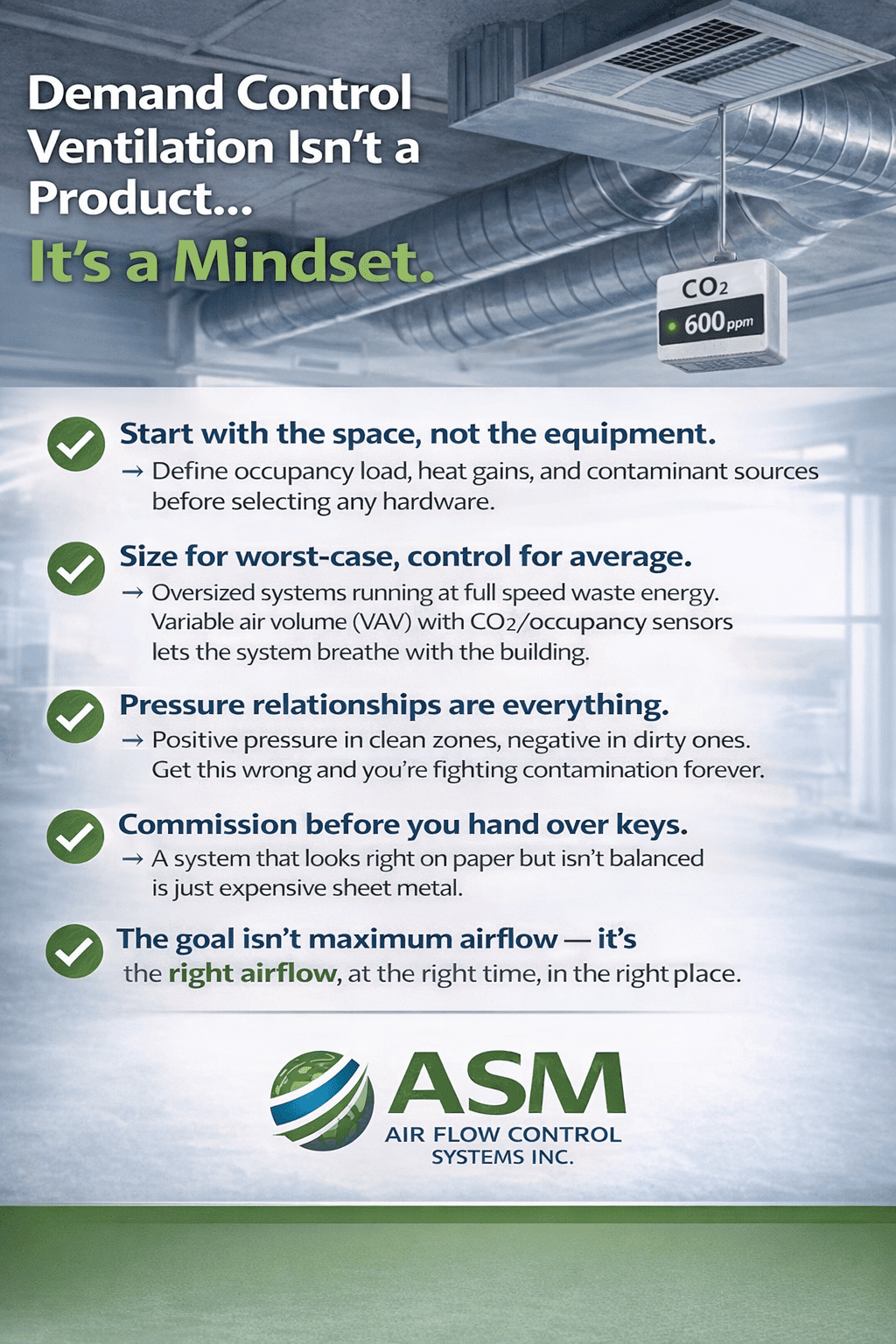
The DCV Mindset: Smart Design Principles
-
Start with the space, not the equipment → Define occupancy, heat gains, and contaminant sources before picking hardware.
-
Size for worst-case, control for average → Oversized systems waste energy. Use Variable Air Volume (VAV) systems with CO₂/occupancy sensors for dynamic control.
-
Pressure relationships matter → Positive pressure in clean zones, negative in dirty ones; get this wrong and contamination persists.
-
Commission before handover → Even a well-designed system on paper can underperform if it isn’t properly balanced.
The goal isn’t maximum airflow—it’s the right airflow, at the right time, in the right place.
💡 Demand Control Ventilation isn’t just a product—it’s smarter engineering for energy savings, indoor comfort, and sustainable building operation.